About No Way Out
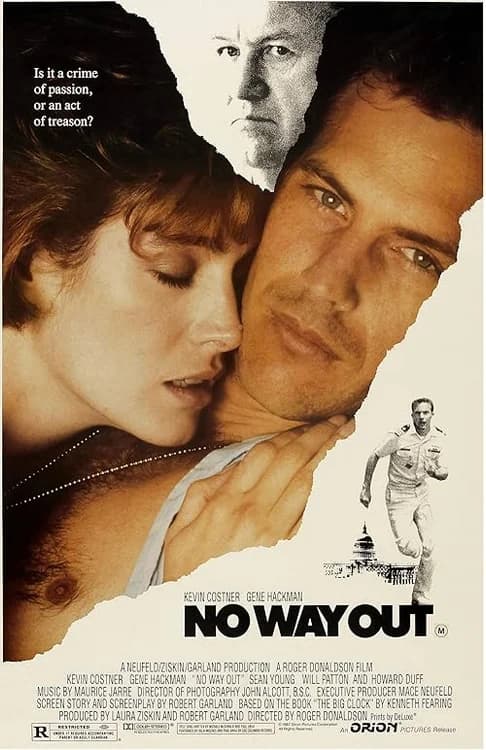
No Way Out (1987) is a masterfully crafted political thriller that combines espionage, romance, and bureaucratic intrigue into a tense cinematic experience. The film follows Lieutenant Commander Tom Farrell (Kevin Costner), a Pentagon naval aide who becomes entangled in a dangerous web when he's assigned to investigate the murder of a young woman with whom he was secretly involved. As Farrell leads the manhunt for a supposed Soviet spy, he must navigate the treacherous waters of Washington politics while concealing his own connection to the case.
Director Roger Donaldson maintains relentless tension throughout the film's 114-minute runtime, expertly balancing the personal drama with larger political machinations. Kevin Costner delivers one of his most compelling early performances, perfectly capturing Farrell's growing desperation as the investigation closes in on him. Gene Hackman is equally formidable as the powerful Secretary of Defense David Brice, whose political ambitions drive much of the plot's conflict.
The film's greatest strength lies in its intricate plotting and genuine suspense, enhanced by a memorable twist ending that has become legendary among thriller enthusiasts. The Washington D.C. setting adds authenticity to the political maneuvering, while the romantic subplot provides emotional stakes that elevate the story beyond a simple spy thriller. With its intelligent script, strong performances, and atmospheric direction, No Way Out remains a standout in 1980s cinema that continues to engage viewers with its sophisticated narrative and moral complexities.
Director Roger Donaldson maintains relentless tension throughout the film's 114-minute runtime, expertly balancing the personal drama with larger political machinations. Kevin Costner delivers one of his most compelling early performances, perfectly capturing Farrell's growing desperation as the investigation closes in on him. Gene Hackman is equally formidable as the powerful Secretary of Defense David Brice, whose political ambitions drive much of the plot's conflict.
The film's greatest strength lies in its intricate plotting and genuine suspense, enhanced by a memorable twist ending that has become legendary among thriller enthusiasts. The Washington D.C. setting adds authenticity to the political maneuvering, while the romantic subplot provides emotional stakes that elevate the story beyond a simple spy thriller. With its intelligent script, strong performances, and atmospheric direction, No Way Out remains a standout in 1980s cinema that continues to engage viewers with its sophisticated narrative and moral complexities.