About Picnic at Hanging Rock
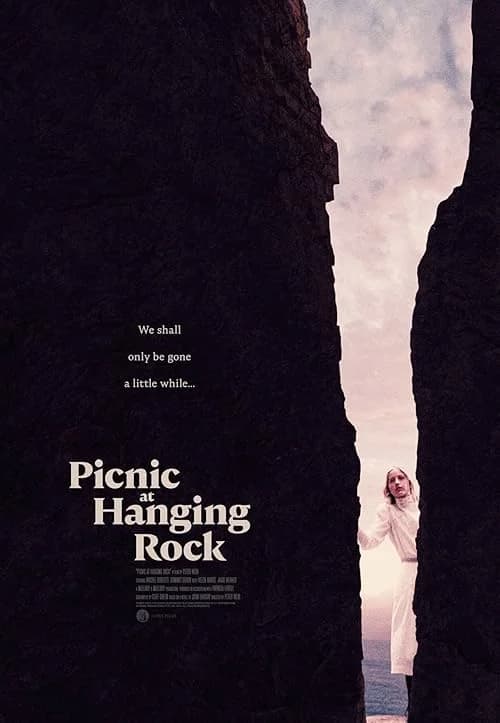
Peter Weir's 1975 masterpiece, Picnic at Hanging Rock, is a hypnotic and unsettling journey into the heart of Australian Gothic. Set on a stifling summer day in 1900, the film follows the students and staff of Appleyard College, a strict boarding school for young ladies, on an excursion to the monolithic Hanging Rock. What begins as a genteel picnic descends into an eternal mystery when three students and a mathematics teacher inexplicably vanish among the ancient volcanic formations. The film is less a conventional detective story and more a profound meditation on repression, the clash between European order and the primordial Australian landscape, and the elusive nature of truth.
The film's power lies in its mesmerizing atmosphere. Weir, with cinematographer Russell Boyd, creates a dreamlike, sun-drenched haze that feels both beautiful and oppressive. The performances, particularly from Helen Morse as the ethereal Mademoiselle de Poitiers and Rachel Roberts as the stern headmistress Mrs. Appleyard, are perfectly pitched, conveying volumes of unspoken tension. The haunting score by Bruce Smeaton and the use of panpipes further deepen the sense of otherworldly dislocation.
Viewers should watch Picnic at Hanging Rock for its unparalleled ability to cultivate mystery. It refuses easy answers, instead inviting you to ponder the events alongside the traumatized survivors. Its influence on atmospheric filmmaking is immense, and its images linger long after the credits roll. It is a essential, haunting experience that questions the very foundations of civilization and sanity.
The film's power lies in its mesmerizing atmosphere. Weir, with cinematographer Russell Boyd, creates a dreamlike, sun-drenched haze that feels both beautiful and oppressive. The performances, particularly from Helen Morse as the ethereal Mademoiselle de Poitiers and Rachel Roberts as the stern headmistress Mrs. Appleyard, are perfectly pitched, conveying volumes of unspoken tension. The haunting score by Bruce Smeaton and the use of panpipes further deepen the sense of otherworldly dislocation.
Viewers should watch Picnic at Hanging Rock for its unparalleled ability to cultivate mystery. It refuses easy answers, instead inviting you to ponder the events alongside the traumatized survivors. Its influence on atmospheric filmmaking is immense, and its images linger long after the credits roll. It is a essential, haunting experience that questions the very foundations of civilization and sanity.